Die Trying · 03
Transcription
One model on the whole session file, then lines a person can read and fix. Who said what is still a manual job.
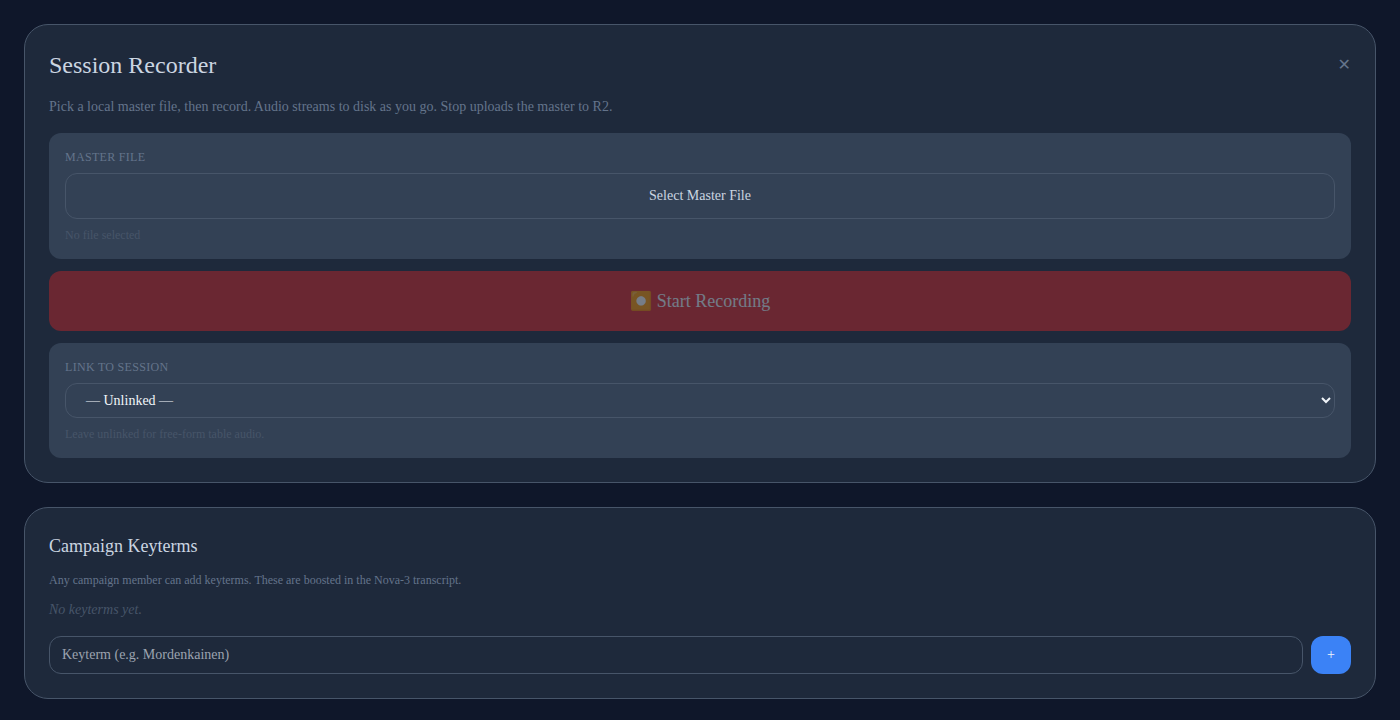
- Record. The DM opens a recorder window. Audio streams to a local master file as the session runs and uploads to R2 when recording stops.
- Transcribe. Deepgram Nova-3 on Workers AI reads the audio straight from the R2 binding, boosted with the campaign's keyterms: the names, places and spells the table invented.
- Lines. Words are grouped into timed lines and stored in D1, with the raw model output kept in R2. Any line can be corrected or tagged to a character by hand.
[placeholder] Diagram: the transcription pipeline, from recorder to R2 to Nova-3 to timed lines in D1.
Next: speaker separation. The code is written: pyannote runs alongside Nova-3, matches each voice against a voiceprint enrolled for each player, and words are aligned to speaker turns so lines arrive already tagged. It will run in a self-hosted container rather than the hosted pyannoteAI service, and that container has not been built yet.