Die Trying · 02
At the table
The app ships no rules and no content. The table brings the game; the app keeps the books.
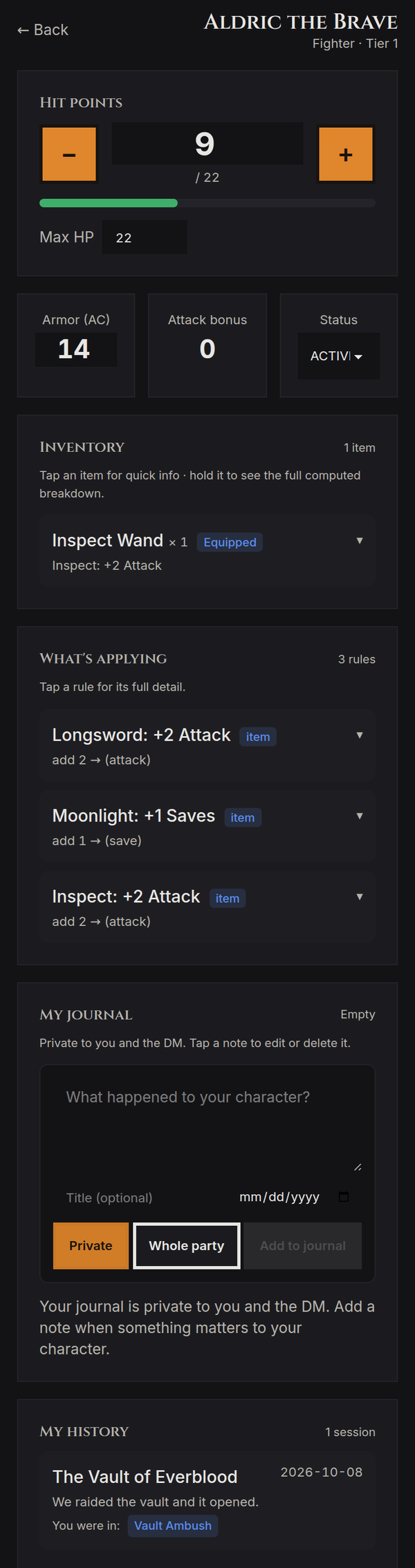
- The party board. Hit points, armor, attack and an HP bar per character, with a zoom for the TV across the room. Conditions are colored by a pattern match on the name, so a condition the table invents still lands somewhere sensible:
- Red. Out of the action: grappled, restrained, stunned, paralyzed, prone.
- Orange. Weakened: poisoned, frightened, blinded, deafened, charmed.
- Blue. Helped: bless, haste, shields, invisibility, flying.
- Gray. Anything else the table invents. The DM types it, the board shows it.
- Characters. Every label is the table's own. Templates for fantasy, sci-fi, modern and horror, or a blank one.
- Loot. An append-only ledger: the DM preps a pile, sends it, the party splits it.
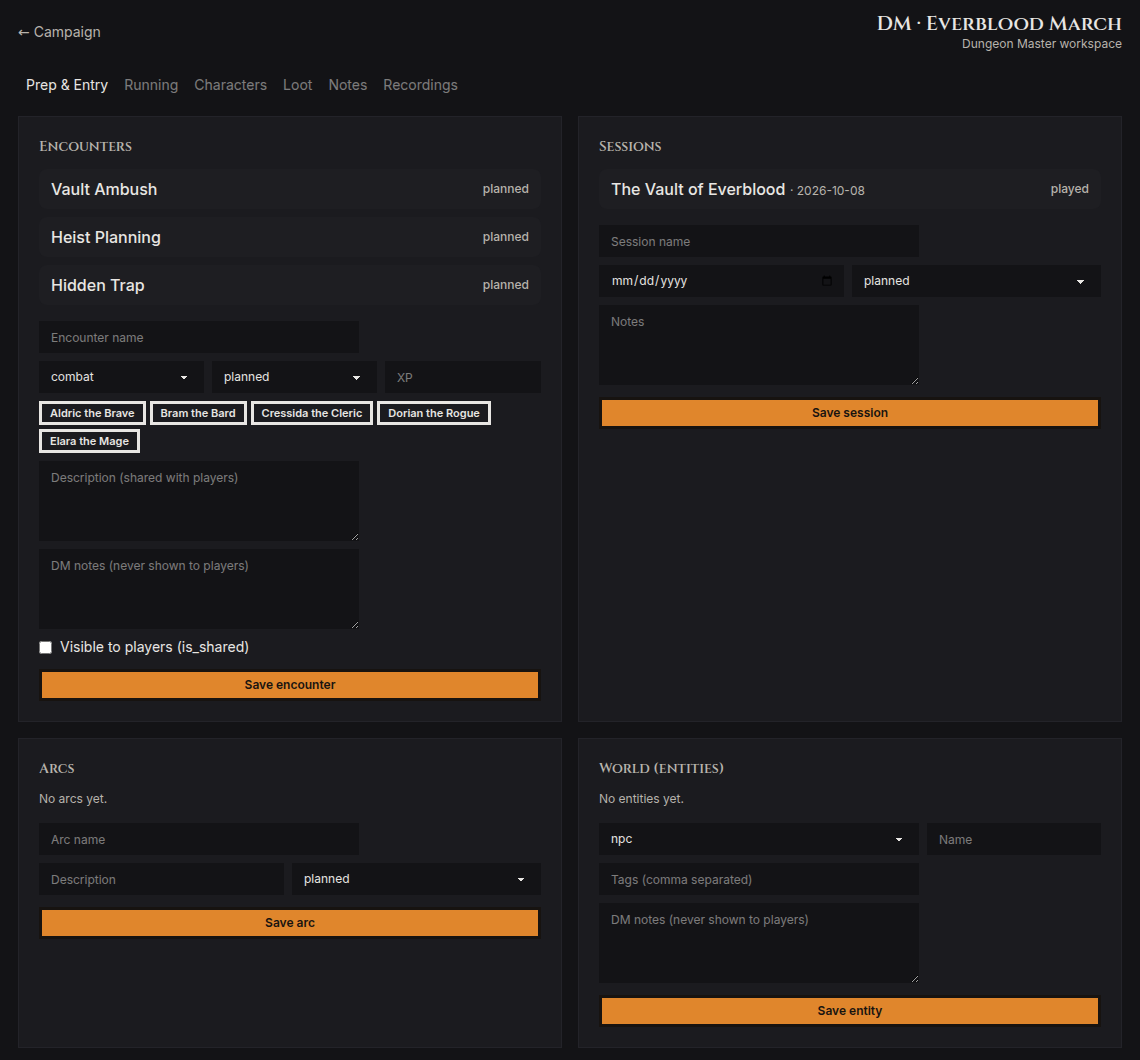
- Journals and the DM workspace. Private by default. DM notes never leave the server on a player's request.